

Dear friends, Seasons’ Greetings! Your Goal Our Support It is my immense pleasure to welcome you to Bahubali College of Engineering (BCE), Shravanabelagola. An institution with a Gurukula like atmosphere for the overall development of student...
Gommatanagar, Shravanabelagola 573 135, Hassan District(Karnataka)
(Approved by AICTE New Delhi, Affiliated to VTU, Belagavi and Recognised by Government of Karnataka)

Dear friends, Seasons’ Greetings! Your Goal Our Support It is my immense pleasure to welcome you to Bahubali College of Engineering (BCE), Shravanabelagola. An institution with a Gurukula like atmosphere for the overall development of student...

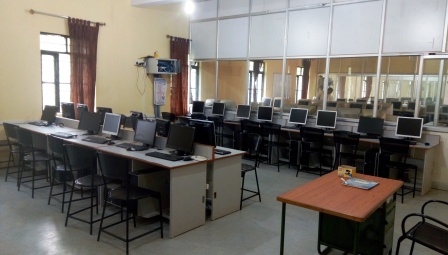
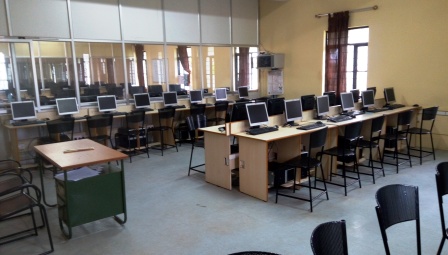
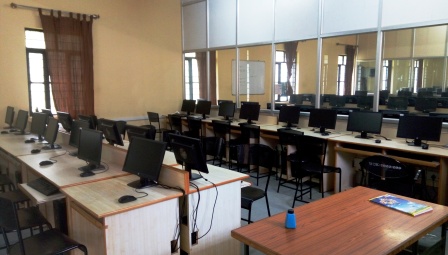
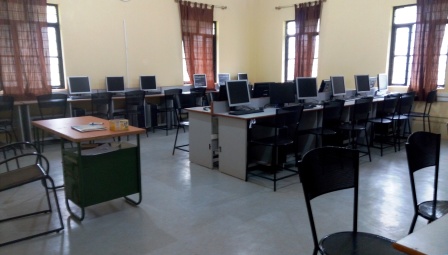
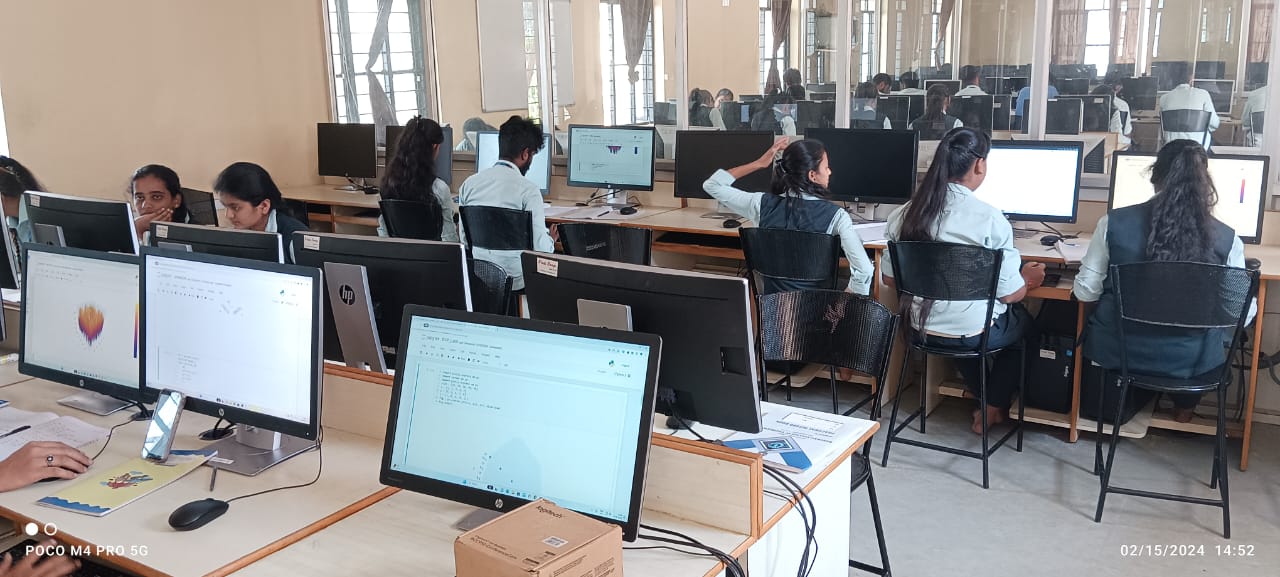
Today the learning of Computer Programming begins with mainly C language. It is a structured programming. The whole UNIX operating system is written by using C language. By using C language we can develop both system software and application software. This lab includes some basic programs in C language that helps students to understand fundamentals of C language.

This lab handles digital and analog signals. The goal of this lab is to introduce students to the components, framework for creating and implementing electronic circuits and students will learn how to implement the same and how to measure their performance using multi meters, waveform generators and oscilloscope.

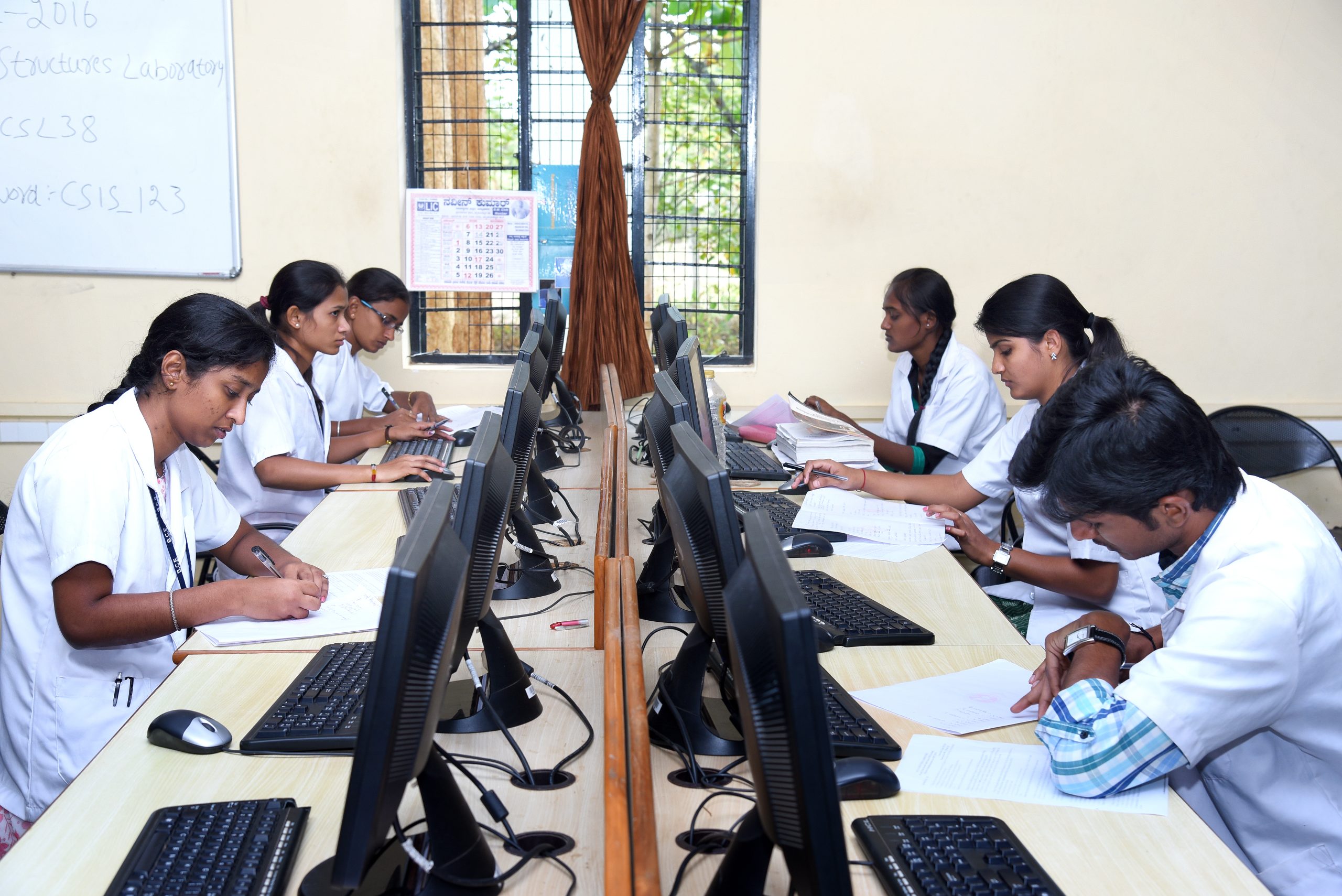
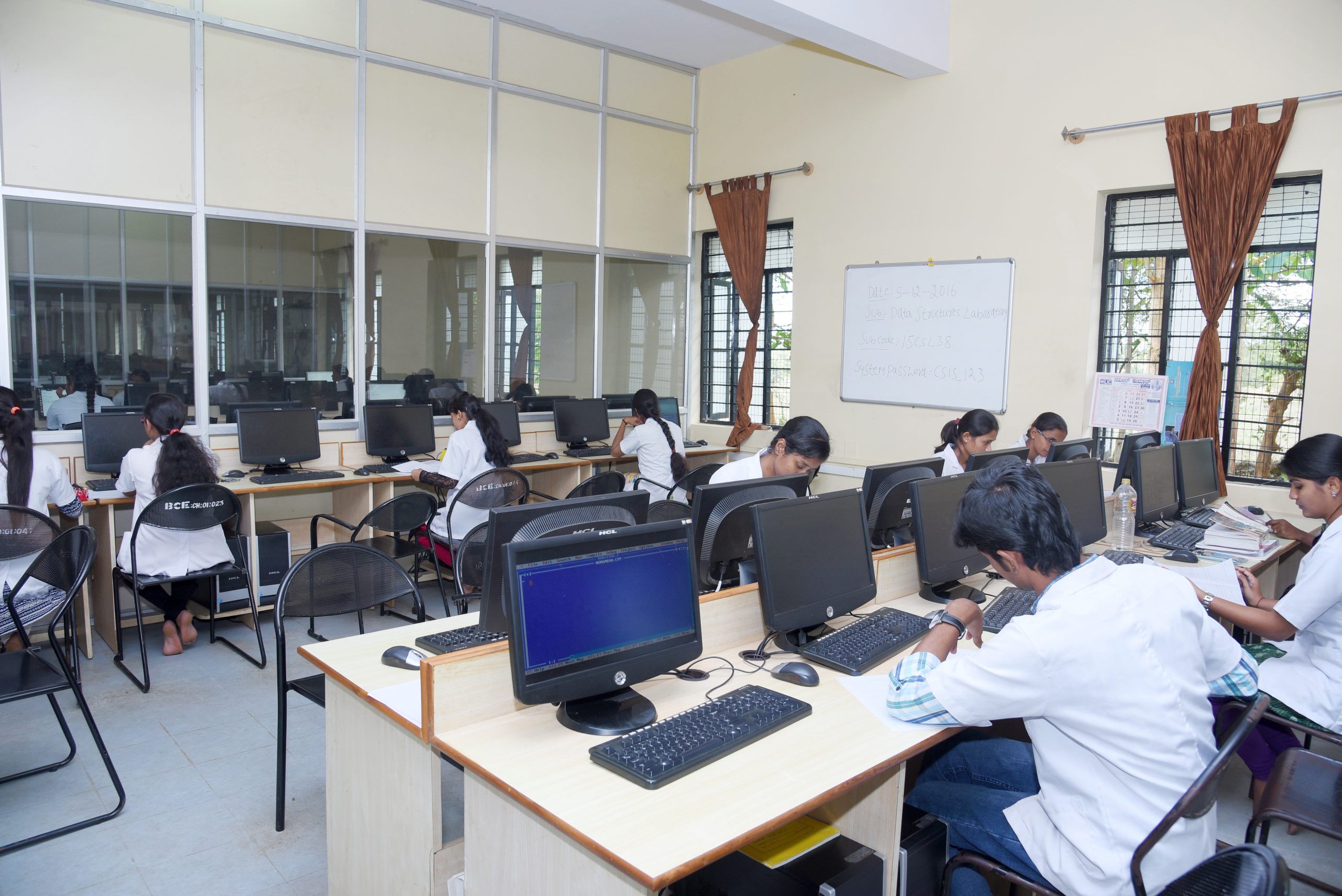
This lab helps the students about a way of collecting and organising data so that they can perform some operations on these data in an effective way. And they can be able to understand the fundamentals of data structures such as stacks, queues, linked list, tree and structures in computer science and information science. At the end the students will able to design and analyze the time and space efficiency of the data structures.

In this laboratory students learn how to analyze a problem and design the solution for the problem. In addition to that solution must be optimum, that is time and memory usage of the solution must be very low. It emphasizes on design and analysis of efficient algorithm of non numerical algorithm such as sorting, searching, pattern matching, graph and network algorithm. And this lab deals with the two important parameters: space complexity and time complexity.

This lab is intended as a first level course for micro-computer, and in this laboratory student has to perform the experiments of microprocessor based programming for software and hardware. The ARM laboratory includes a platform for developing and testing software related to ARM architecture and many basics of ARM programming Principles

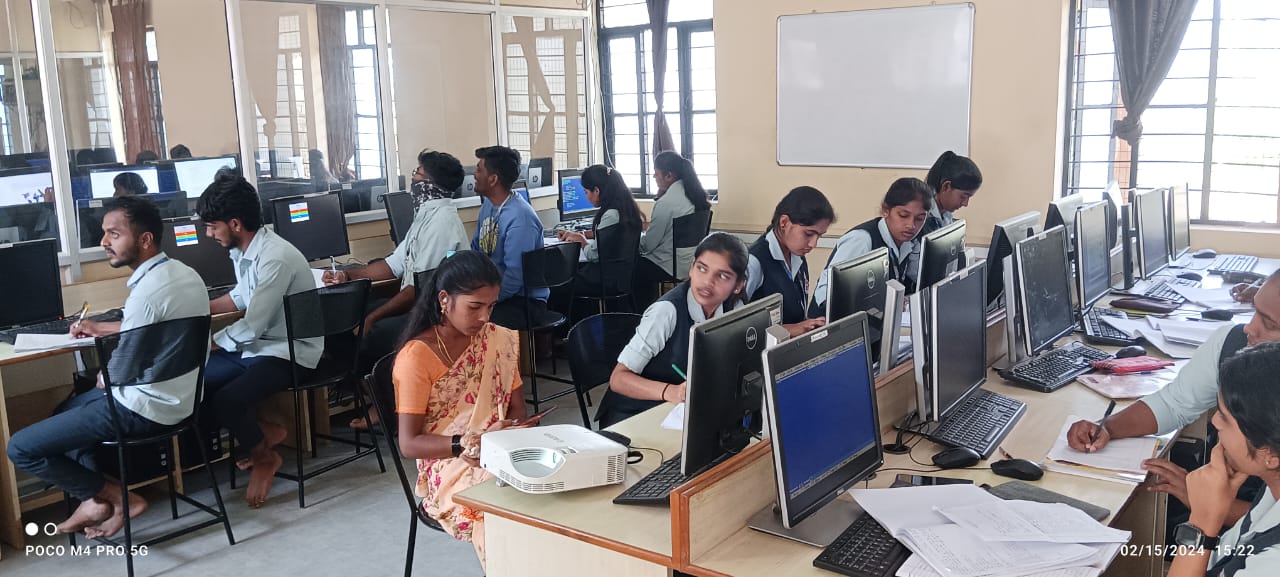
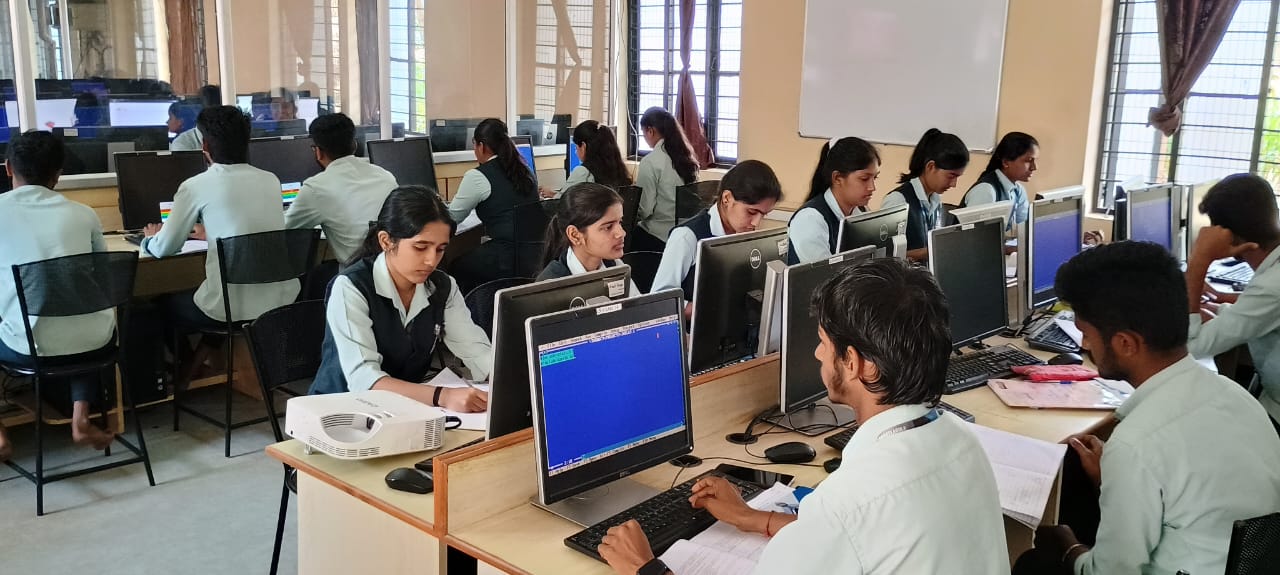
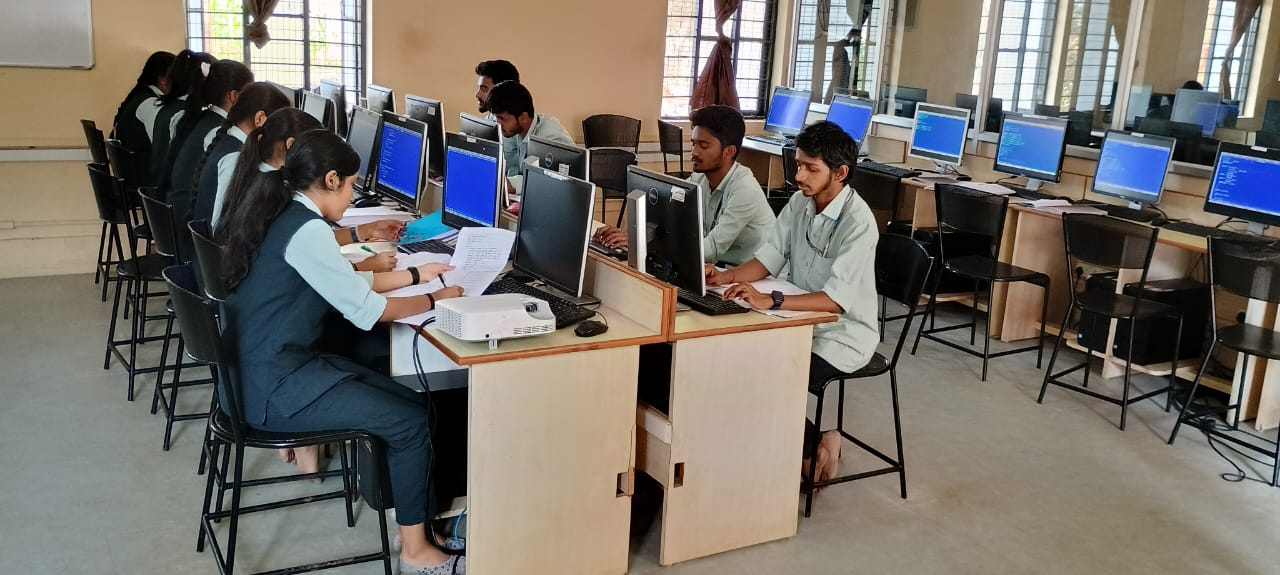
This laboratory enables to store, modify and extract information from a database using SQL and this laboratory is useful for providing a centralized view of data that can be accessed by multiple users in a controlled manner. At the end students will be able to populate and query a database using SQL, DML/DDL commands and design and implement a database scheme for a given problem domain and normalize a database.

Systems Software and Operating System are software that manage computer hardware and software resources and provide common services for computer programs, this laboratory comprises of latest version of user friendly LINUX based operating systems to give the students a lenient curve in order to understand the complexity of technology such as LEX, YACC, UNIX, and C/C++. The LINUX commands, shell functionality and LINUX system calls, shell programming and usage of vi editor can be familiarized with this laboratory.

This laboratory includes two parts one is simulation part and other one is design and implementation part, both parts help to familiarize FTP, TCP/IP , connecting devices and network algorithms to solve problems. The configuration of network routers, switches and traffic can be analyzed and implemented successfully. At the end student can be able to configure a network with no collision, no drop and no congestion.

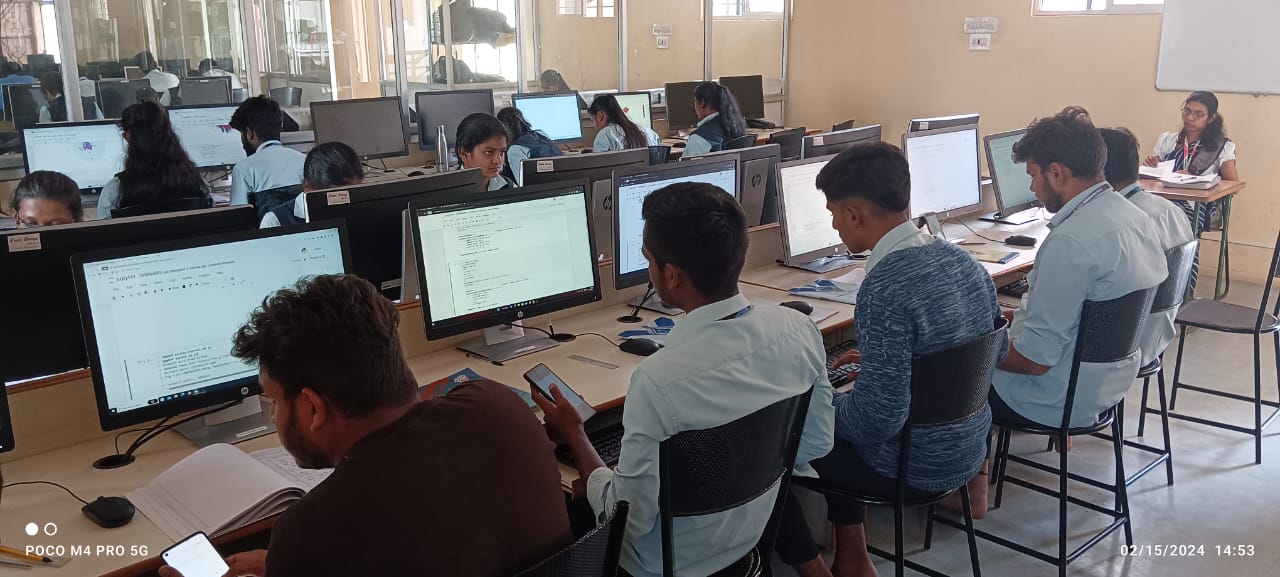
This laboratory offer hands-on experience with MongoDB, a popular NoSQL database, providing practical skills in data management and application development. These labs, often part of university courses or self-paced learning programs, cover essential concepts like database creation, data manipulation (CRUD operations), querying, and more. They also delve into advanced topics like aggregation pipelines, data modeling, and integration with other technologies.

Artificial Intelligence (AI) laboratories are specialized spaces designed for students and faculty to engage in AI-related research, projects, and experimentation. AI labs offer students the opportunity to gain practical experience with AI applications relevant to everyday scenarios, such as predictive analysis, image detection and analysis, and natural language processing tools.

Java is fundamentally based on OOP principles, utilizing classes and objects to structure code, promoting modularity, reusability, and scalability. Java boasts a vast collection of libraries and frameworks, such as the Java Collections framework, which simplifies data manipulation and management. Java is consistently in high demand in the job market due to its widespread use across various industries.

A Technical Writing using LaTeX Laboratory typically focuses on using LaTeX, a document preparation system, to produce high-quality technical documents. The lab exercises often involve creating various types of documents, including those with mathematical equations, figures, tables, and citations. Students will learn to structure documents, format text, and manage references using LaTeX.

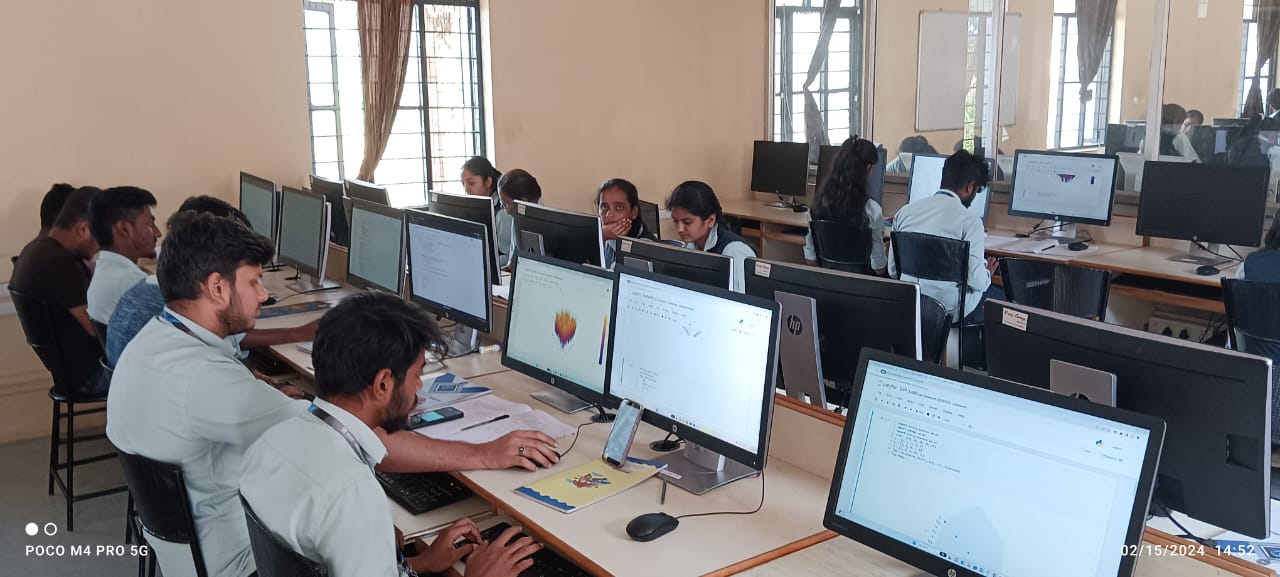
This laboratory provides resources, tools, and training to help users analyze, visualize, and manage data effectively. They facilitate the creation of charts, graphs, maps, and other visual elements to make complex datasets more accessible and understandable.

It focuses on enabling computers to understand, interpret, and generate human language. These labs explore various aspects of NLP, including text analysis, machine translation, information retrieval, and the development of intelligent systems that can interact with users through natural language.

This laboratory aim to equip students with the skills to build intelligent systems, analyzes data, and develops solutions for real-world problems. It includes specialized equipment, software, and datasets for developing and testing machine learning algorithms and applications. They also facilitate research projects, offer training in various machine learning domains.

This lab equips students with practical skills in tools and methodologies used in modern software development lifecycles Students learn to automate the build, testing, and deployment processes using tools like Jenkins, GitLab CI, and Azure DevOps.

These labs often focus on core concepts, algorithms, and applications, utilizing tools like Tensor Flow and PyTorch. It will cover foundational concepts like neural networks, convolution neural networks (CNNs), recurrent neural networks (RNNs), and transformers. Students will learn about Markov Decision Processes (MDPs), Q-learning, policy gradients, and deep Q-networks (DQNs).
The Institution Bahubali College of Engineering(BCE) was established during 1997 by His Holiness Jagadguru Karmayogi Swasthishree Charukeerti Bhattaraka Swamiji,the Chairman of the S.S.D.J.J.P Sanga.
The Institution Bahubali College of Engineering(BCE) was established during 1997 by His Holiness Jagadguru Karmayogi Swasthishree Charukeerti Bhattaraka Swamiji,the Chairman of the S.S.D.J.
Website Powered by JainDirect.org
© Bahubali College of Engineering. All Rights Reserved