

Department of Electronics and Communication Engineering
Menu
About
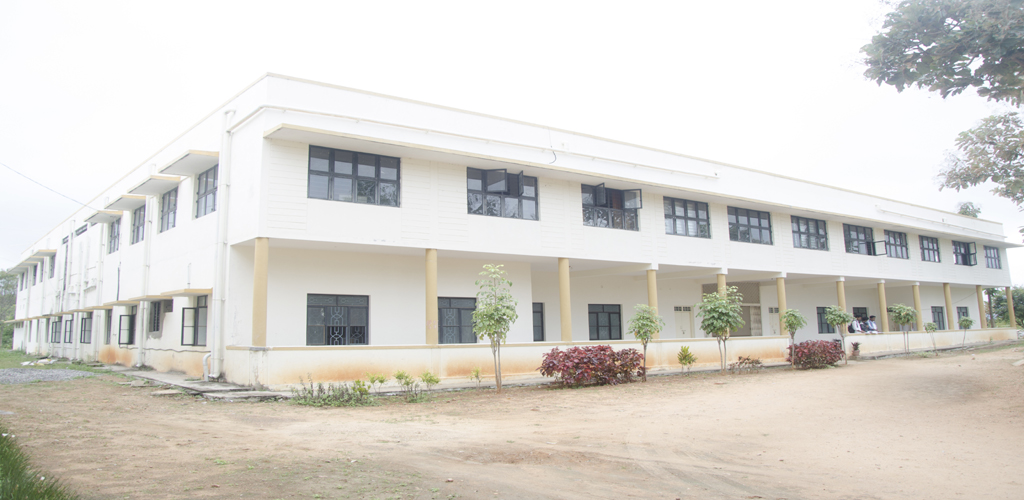
The Department of Electronics and Communication Engineering at BCE, Shravanabelagola, has been a hub of innovation and excellence since its inception in 1997, with intake 60 students. The department nurtures students to become competent engineers, researchers and entrepreneurs, contributing to society and industry with cutting – edge solutions
Programme Overview
Over the past decade, Electronics and Communication Engineering (ECE) has evolved into an essential field shaping every aspect of modern life. The technological sophistication we enjoy today—through smartphones, ultra-slim computing devices, Ultra HD televisions, and interconnected wireless networks—stems from the innovative contributions of electronics and communication engineers worldwide. At Bahubali College of Engineering, the ECE programme equips students with a strong foundation in key domains such as Circuit Theory, Electronic Devices and Circuits, Digital Systems, Antennas, Communication Systems, Embedded Systems, Signal Processing, VLSI Technology, Wireless Communication, and Programming Skills, preparing them to meet the diverse demands of both hardware and software industries. With continuous advancements in VLSI, IoT, Networking, Artificial Intelligence, Machine Learning, and modern EDA tools, the programme ensures that students remain aligned with global technological trends and are well-prepared for promising career opportunities across the electronics and communication sector.
Career Opportunities and Future Prospects
Driven by the Central Government’s visionary “Make in India” initiative, the Electronics and Communication sector in India is on the brink of remarkable expansion, creating vast employment and innovation opportunities for aspiring engineers. As one of the most versatile and rapidly evolving engineering domains, ECE professionals are in high demand across industries worldwide. Equipped with strong fundamentals in Electronics, Communication Systems, Embedded Technologies, Networking, and proficiency in modern EDA tools, graduates can pursue diverse and rewarding career paths as Embedded System Engineers, Electronics Design Engineers, Network Engineers, Software Developers, System Control Engineers, and Electronics Design and Development Engineers. The multidisciplinary nature of this field ensures that ECE graduates remain at the forefront of technological advancement and innovation across both hardware and software industries.
Vision & Mission
Programme Educational Objectives
Programme Outcomes
Program Specific Outcomes (PSOs)
Vision & Mission
Vision
To create Electronics and communication Engineers capable to lead in technological innovation to contribute nation building by utilizing and disseminating the acquired knowledge.
Mission
- To deliver quality education in the field of Electronics and Communication Engineering.
- To provide students the resources and opportunities to have a successful career.
- To bestow leadership qualities with ethical and social awareness among the students.
Programme Educational Objectives
- PEO1: To develop technically competent graduates who can contribute to the development of society in the field of Electronics & Communication Engineering.
- PEO2: To be receptive to new technologies through Continuous learning and execution.
- PEO3: To be a good team member with ethics and leadership qualities.
Programme Outcomes
- PO1.Engineering knowledge: An ability to apply knowledge in mathematics, science and engineering subjects .
- PO2.Problem analysis: An ability to identify, formulate and solve engineering problems.
- PO3.Design/development of solutions: An ability to design and conduct experiments to interpret data and analyze the results.
- PO4.Conduct investigations of complex problems: An ability to investigate and propose a solution to a problem that is complex and cannot be solved through conventional techniques.
- PO5.Modern tool usage: An ability to create, select and apply appropriate techniques, resources and modern engineering and IT tools.
- PO6.The engineer and society: An ability to design system components or processes to satisfy the needs of the society within realistic constraints such as economical, social, political, ethical, health, safety and manufacturing.
- PO7.Environment and sustainability: An ability to gain knowledge to understand the impact of engineering solutions in a global, environmental and societal context.
- PO8.Ethics: An ability to understand professional and ethical responsibilities.
- PO9.Individual and team work: An ability to function on multi-disciplinary teams.
- PO10.Communication: An ability to communicate effectively on complex engineering activities.
- PO11.Project management and finance: An ability to use techniques, skills and modern engineering tools and management principles necessary for engineering practice.
- PO12.Life-long learning: An ability to understand the need and engage in life-long learning process.
Program Specific Outcomes (PSOs)
PSO1: Graduates will be able to apply theoretical and practical knowledge to develop circuits, programs, VLSI & embedded systems for real time applications.
PSO2: Graduates can communicate ideas and take up responsibility so as to become an entrepreneur with ethical values.